Wedding season means endless outfit changes, back-to-back functions, and a jewellery box that needs to keep up. The good news? You don't need a locker full of gold to look every bit the part. Artificial jewellery has come a long way — today's Kundan sets, chokers, and mangalsutras are crafted with enough detail and shine to hold their own at any function, from the mehendi to the reception.
Made from materials like synthetic crystals, glass, acrylic and metal, artificial jewellery is light to wear, gentle on sensitive skin, affordable, and easy to mix and match with different outfits. Here's how to style it for weddings so every look feels intentional, not accidental.
01Match your jewellery to the function, not just the outfit
Every wedding function has its own mood, and your jewellery should follow that lead rather than being planned around the outfit alone.
- Mehendi/Haldi: Go light and playful. Simple jhumkas or floral-style earrings paired with delicate bangles work well — this is not the day for heavy chokers.
- Sangeet: This is where you can go bold. Statement earrings or a layered necklace catch the light beautifully under evening lighting and photography.
- Wedding day: Choose a full set — a Kundan choker or a mangalsutra paired with matching earrings — that anchors the outfit as the centrepiece of the day.
- Reception: Sleeker, more contemporary pieces tend to suit reception outfits better, especially if the lehenga or saree is heavily embellished on its own.
02Let the neckline decide the necklace
The cut of your blouse or outfit neckline plays a bigger role in jewellery choice than most people realise.
- High neck blouses: Skip the choker and go for a longer necklace or statement earrings instead, so the jewellery doesn't compete with the neckline.
- Sweetheart or V-necklines: A choker sits beautifully here, filling the space without overwhelming it.
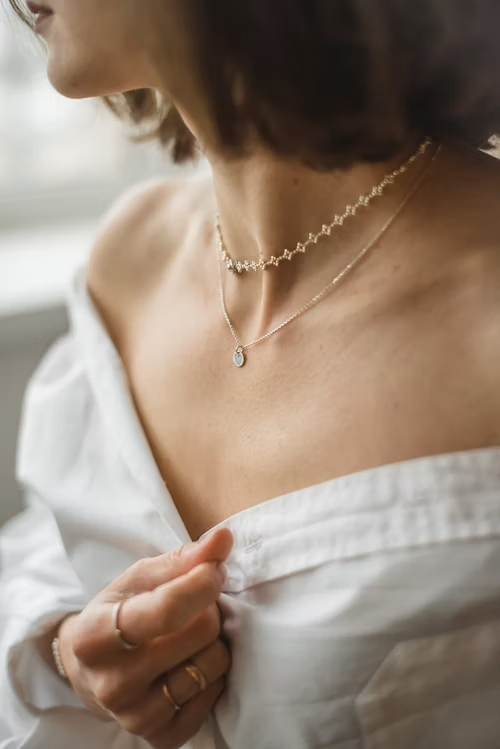
- Boat necks or off-shoulder styles: These can carry layered necklaces well, since there's more visual space to work with.
03Balance heavy outfits with simpler jewellery
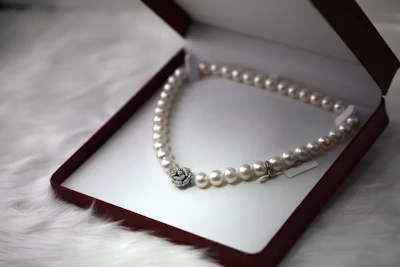
If your lehenga or saree already has intricate embroidery, sequin work, or a heavy border, let the outfit lead. A single well-chosen piece — like a statement choker or a pair of jhumkas — will look more elegant than stacking multiple heavy pieces on top of an already busy outfit.
On the flip side, if your outfit is relatively simple or solid-coloured, this is where you can layer more confidently — think a necklace-and-choker combination, or bangles stacked generously on both wrists.
04Colour-match with intention
Artificial jewellery today comes in enough colour variety that matching (or intentionally contrasting) is easy.
- Gold-toned sets pair well with red, maroon, and most traditional bridal colours.
- Silver or oxidised pieces work beautifully with pastels, and are especially popular for mehendi and haldi functions.
- Kundan with coloured stones — emerald green, ruby red, or sapphire blue — can either match your outfit's dupatta or provide a deliberate contrast against a solid-coloured lehenga.
05Don't forget the details
The pieces that often get overlooked make the biggest difference in photographs.
- Maang tikka: Frames the face and is especially important for wedding-day and sangeet looks.
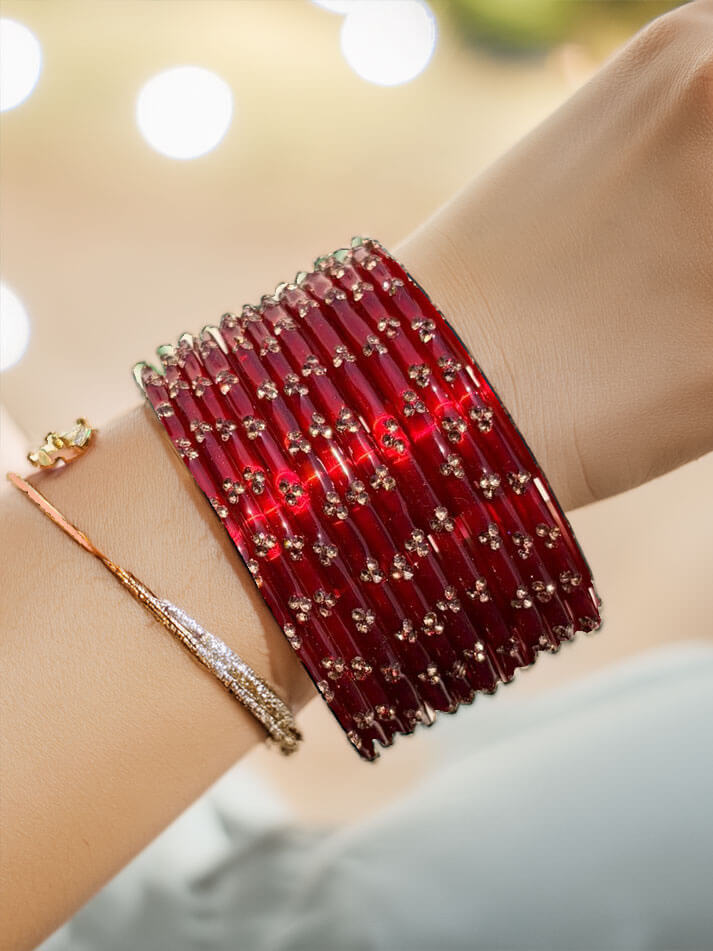
- Bangles: Stack 4–6 for a fuller look on function days; keep it to 2–3 delicate pieces for daytime events.
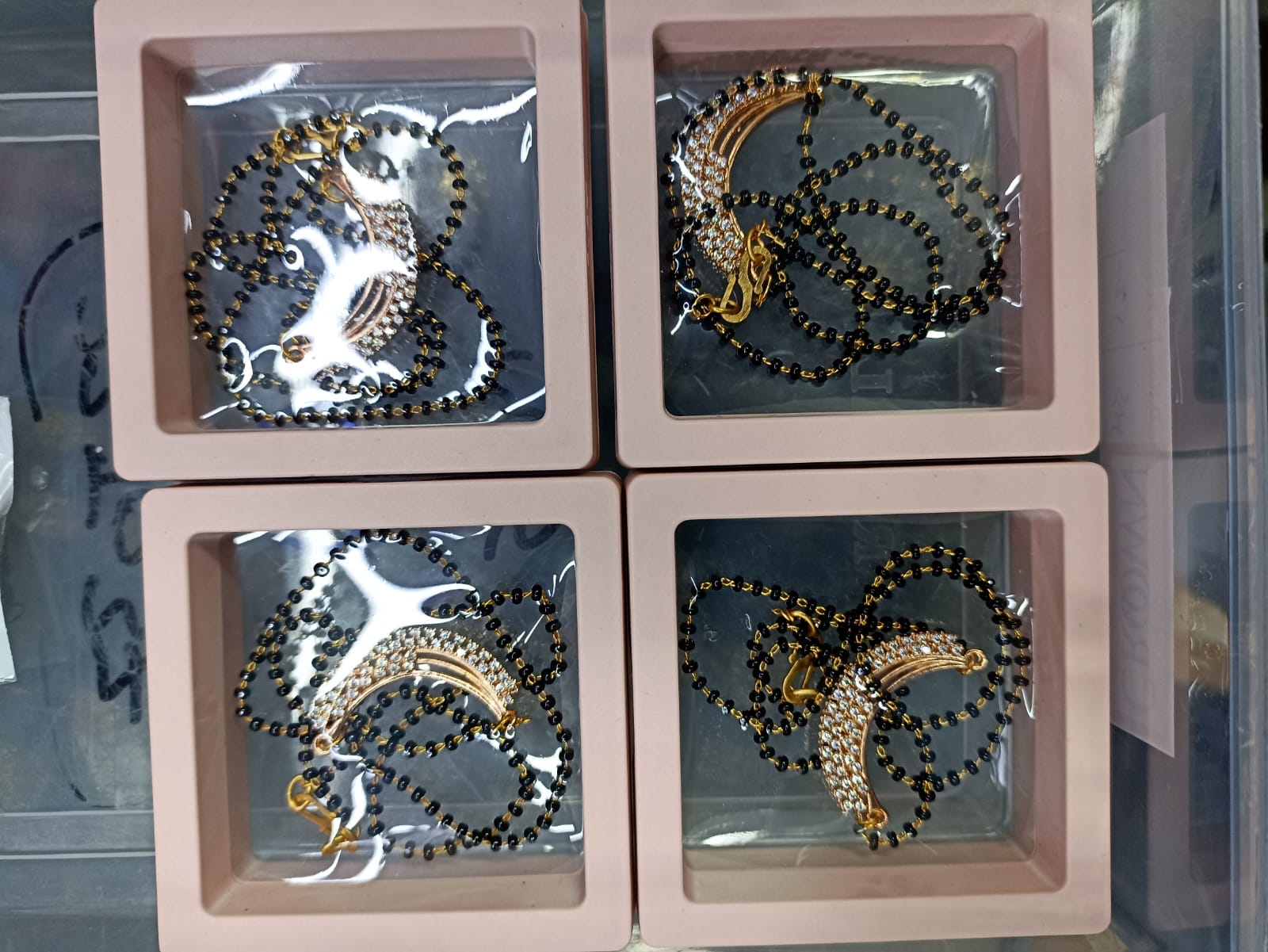
- Mangalsutra: For the wedding day itself, a well-designed mangalsutra can double as both tradition and statement piece — many modern designs are subtle enough to wear even with heavier necklaces.
- Rings: Cocktail rings finish the look, especially for close-up hand shots during rituals.
06Layering without overdoing it
Layering is one of the biggest jewellery trends at weddings right now, but it works best with a plan.
- Stick to 2–3 layers of varying lengths rather than piling on everything at once.
- Keep earrings simpler if you're layering necklaces heavily.
- If layering bangles and rings, balance it out by keeping the neckline jewellery relatively minimal.
07Comfort matters more than people expect
Wedding functions often run long — think hours of standing, dancing, and rituals. Artificial jewellery has an advantage here: it's typically lighter than real gold and Kundan work, making it easier to wear through a full day of festivities without the weight fatigue that comes with heavier metal pieces.
Final tip: try the full look before the day
A few days before the function, try on every piece with the full outfit — blouse, skirt, dupatta and all. Lighting, outfit colour and blouse neckline can quietly make or break a jewellery piece, so try it on at home under similar lighting to where you'll actually wear it. If you're buying online, give yourself a few days' buffer to make any last-minute swaps.